
Why better navigation matters more than it seems
How a small UX improvement in ARIS Portal helps users move faster, stay oriented, and work with more confidence across published content.

Cecilia Lauer
Director Product Management | ARIS
A small friction point that adds up quickly
Anyone who works with published process content knows the pattern. You open a model, follow a linked object, move into related documentation, then jump again. Within a few clicks, the task itself is still clear, but your orientation is not.
That may sound minor, but in practice it slows down reviews, approvals, audits, and everyday process lookups.
When users have to retrace steps, restart from the navigation tree, or rely on trial and error to get back to the right place, momentum drops. Over time, that creates unnecessary friction in work that should feel straightforward.
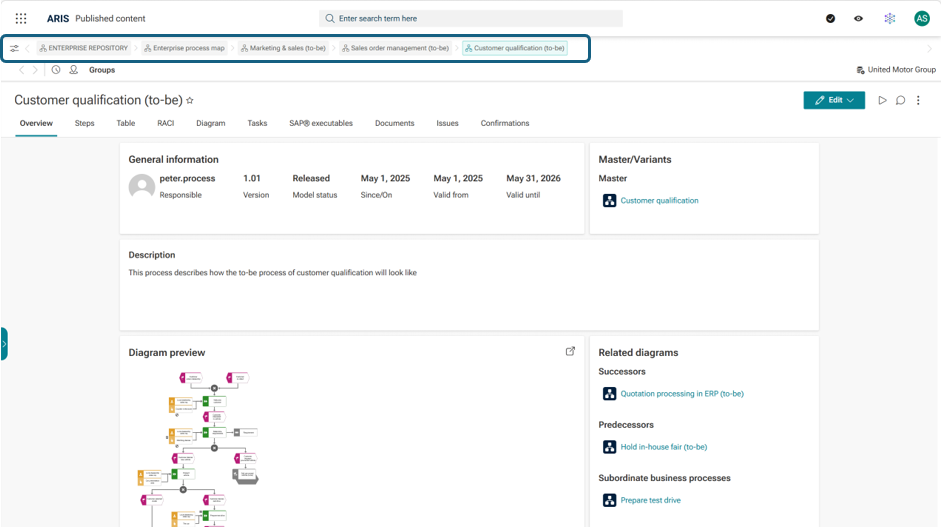
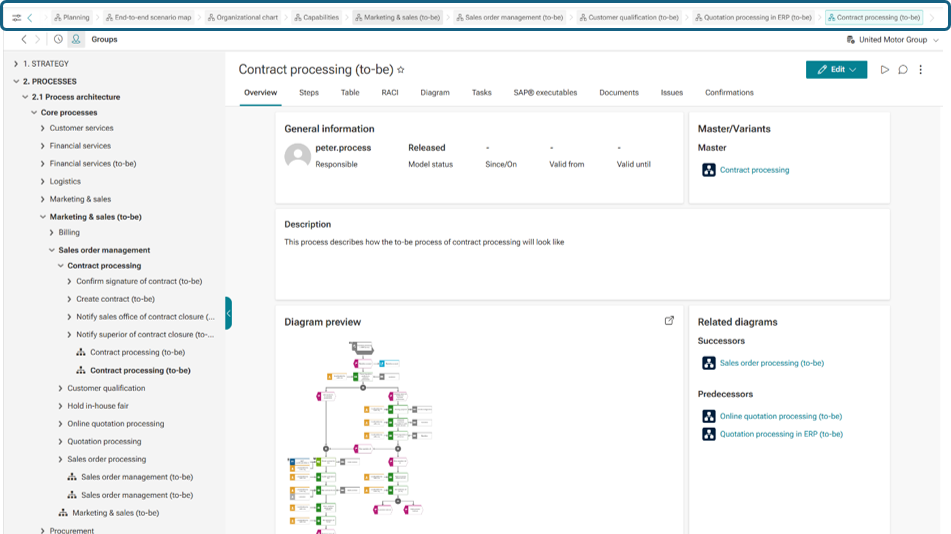
With ARIS 10.2026.5, ARIS Portal introduces breadcrumbs and recent history for published content. The update is simple in concept, but useful in practice: it helps users understand where they are, return to what matters, and continue work without losing context.
What changes in ARIS Portal
The new breadcrumb bar shows the path a user has taken and makes earlier steps directly accessible. A recent history panel complements that by keeping a longer record of visited items, so users can reopen relevant models, objects, groups, and documents without navigating from scratch. Together, these additions make movement through published content more transparent and more efficient.

Why this matters for business users
The value of this update is not in adding another feature to learn. It is in removing small moments of interruption that break flow when people work with process content.
It helps people stay oriented. Whether someone is reviewing a process, checking dependencies, preparing for a change, or validating documentation, visible navigation context reduces guesswork and makes the path through content easier to follow.
It makes lookup work faster. In many organizations, published process content is used well beyond process teams. Business stakeholders, auditors, operations leads, and subject matter experts often need to move across related items quickly. Better navigation helps them get in, find what they need, and move on without unnecessary detours.
It supports continuity across tasks. Recent history is especially useful when work happens over several sessions rather than in one sitting. Users can return to the content they were working with before instead of rebuilding the same path again.
A better experience without a bigger learning curve
One of the strengths of this update is that it improves the user experience without changing the basic way people work in ARIS Portal. Breadcrumbs make the current route visible. Recent history extends that value over time by keeping previously visited content within easy reach.
That matters because good process work often depends on speed of orientation as much as depth of analysis. If users can move through related content with less friction, ARIS becomes easier to use in the moments where process insight needs to support a real business decision.


The broader takeaway
Not every meaningful product improvement has to be dramatic. Sometimes the most valuable changes are the ones that remove friction from common tasks and make the platform easier to rely on day after day.
That is the case with breadcrumbs and recent history in ARIS Portal. They help users stay in context, work faster across connected content, and get more value from published process knowledge with less effort.
If you want to go deeper into the technical side of ARIS, join the ARIS Community. It is the place to follow product updates, discover useful tips, stay informed about upcoming events, and connect with other users and experts around practical ARIS topics.
Go beyond simply “process intelligence” and start running intelligent processes.
It’s time to revolutionize the way you work. Transform your business, optimize operations, and stay in control of your business with ARIS.