
Tesco Creates the Process Foundation for AI at Enterprise Scale
How Tesco is using ARIS to drive operational excellence and build the process intelligence required to deliver tangible returns on its AI investment
Meet our customer
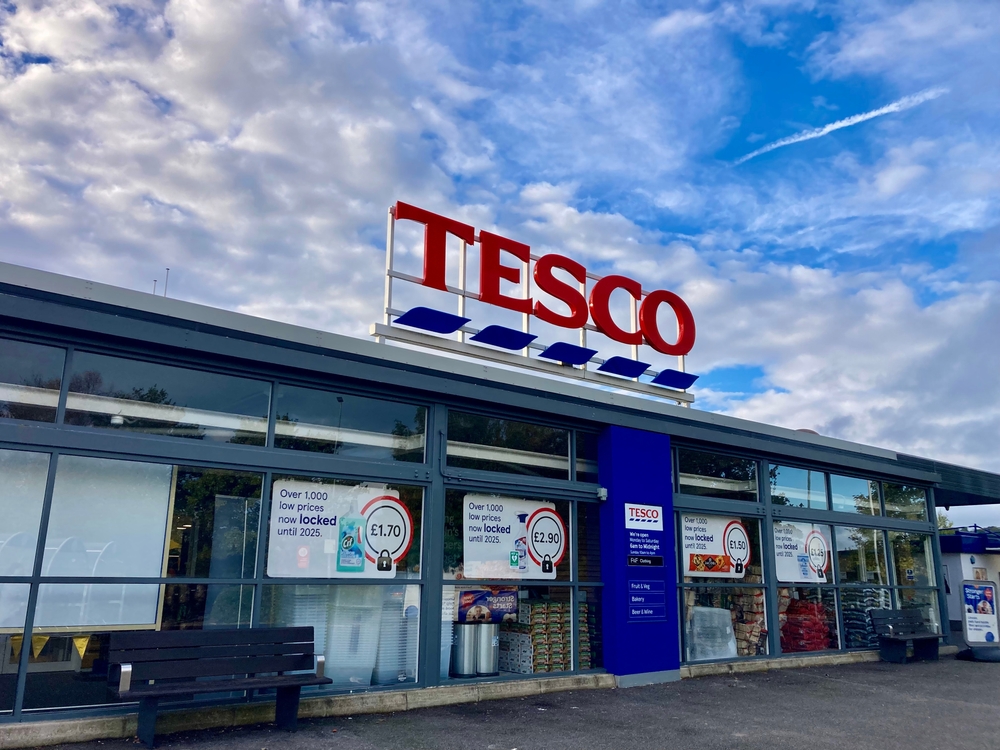
Tesco is one of the world’s leading retailers, serving millions of customers every week across the UK, Ireland and Central Europe. With more than 330,000 employees, over 5,000 stores and annual group sales exceeding £66 billion, delivering consistent experiences for customers, colleagues and suppliers requires thousands of interconnected processes working seamlessly across the business.
Challenges
- Develop a common operating language
- Establish clear process ownership & stronger governance
- Drive improved change management
- Create trusted process baseline
- Deliver greater operational insight
Outcomes
- Built single source of truth for Tesco’s business processes
- 200,000 library objects logged
- 700+ trained users & 3,000 active viewers
- 8,500 published models
- Laid the foundations for agentic AI deployment
- Helped deliver £12m in savings alongside other key enablers/initiatives
Solutions
- Business Process Analysis
- Process Mining
- AI Companion
The origins of a long-term partnership
As its business has continued to grow and evolve, Tesco recognized that greater operational consistency and visibility would be essential to support both transformation initiatives and future innovation. The company needed a more structured way to understand how work happens, who owns critical processes and how change could be governed. This led to a long-term partnership with ARIS that has now been helping shape Tesco’s operating model for almost a decade.
Building a common operating language
Tesco’s process journey began with a clear mandate from senior leadership to establish more structured ways of working across the organisation. The objective was not simply to document processes, but to create a shared understanding of how people, technology, data and operations come together to deliver value.
As Anu Kalia, Head of Global Process Experience at Tesco, explains: “People, data, technology and process all play a part. ARIS became the key enabler to map that, manage it and now evolve towards mining and intelligence.”
Over the years, Tesco has developed one of the largest process environments in retail. Today, ARIS supports more than 8.500 process models, over 200,000 repository objects, 3,000 active users and hundreds of trained process designers across the business.
This extensive process landscape provides a single source of truth for the organization, allowing teams to work from consistent process definitions rather than disconnected documents, spreadsheets or local repositories, ensuring that process owners review and approve changes before they are implemented. The result is greater accountability, improved compliance and a complete audit trail.
Perhaps more importantly, the business now has a reliable baseline of its operations, allowing teams to move more quickly when transformation opportunities arise because the current state of the business is already understood.
Improving supplier experience at scale
For an organization working with approximately 16,000 suppliers, even small process inefficiencies can create significant operational challenges. Tesco uses ARIS Process Mining within its accounts payable operations to gain a deeper understanding of how supplier payment processes actually perform. By analysing process variants, identifying rework loops and uncovering the root causes of delays, the business is able to see where processes deviate from expected outcomes.
This insight helps teams identify bottlenecks, reduce unnecessary complexity and ensure suppliers are paid accurately and on time. Rather than relying on assumptions, process intelligence provides an evidence-based view of how work flows across the organisation.
Supporting colleagues and customers
Process intelligence also plays an important role in Tesco’s store operations. With more than 4,000 stores operating across multiple formats, consistency becomes essential and the processes that support stores are translated into onboarding, training and operational guidance for colleagues, helping teams deliver consistent experiences for customers regardless of location.
Thousands of processes have been incorporated into operational support activities, enabling colleagues to understand how their roles contribute to the wider business.
“Behind every shopping trip, there’s a whole customer experience that’s been mapped, and every one of our colleagues plays a part,” says Kalia.
By improving visibility into these processes, Tesco is able to support change management more effectively, reduce variation between locations and improve both colleague and customer experiences.
Moving from process mapping to process intelligence
Tesco’s process strategy has evolved significantly over the past decade from the initial focus on creating visibility through process mapping to introducing stronger governance and ownership. More recently, attention has shifted toward process intelligence, allowing the business to understand how processes perform in practice rather than simply how they are designed.
This evolution reflects a broader change in how Tesco views process management. Processes are no longer static diagrams that sit on a shelf but living assets that require continuous maintenance, ownership and improvement.
Process intelligence enables the business to identify inefficiencies, understand the causes of rework and uncover opportunities for optimization and future innovation programmes.
Creating the foundation for Agentic AI
Tesco believes that process intelligence is a critical prerequisite for successfully scaling AI and has developed a strategy that combines visibility, governance, mining and intelligence to create a stronger operational foundation.
This approach enables it to understand not only how work should happen, but how it actually happens. According to Kalia, AI cannot operate effectively without this understanding: “AI is nothing without process intelligence.”
The company is now exploring emerging capabilities such as AI-assisted process generation with ARIS AI companion, where structured and unstructured information can be converted into intelligent process models. The goal is to create a process-driven enterprise where technology, emotional intelligence and process intelligence work together to solve real business problems.
By building a trusted foundation of process intelligence today, Tesco is creating the conditions needed to scale both operational excellence and Agentic AI across one of the world’s largest retailers.
Go beyond simply “process intelligence” and start running intelligent processes.
It’s time to revolutionize the way you work. Transform your business, optimize operations, and stay in control of your business with ARIS.